

Two exporters. Same product. Same international buyer. One is paying customs duty on raw material imports upfront and claiming it back after shipment. The other never pays that duty at all.
Guess which one has better margins?
Both the Advance License and Duty Drawback schemes are designed to ensure taxes don't travel with export products. But they work very differently, and for most manufacturers, one saves significantly more than the other.
The confusion is real. Many exporters default to Duty Drawback because it feels simpler. Others use Advance Authorisation but aren't sure if they're leaving money on the table with Drawback. And some don't fully use either.
In this blog, you'll get a clear, honest comparison of both schemes, how each works, what it actually saves you, where each one falls short, and which one makes more sense for your export business in 2026. By the end, you'll know exactly which scheme fits your situation and how expert DGFT consultants can help you maximise the one you choose.
How Each Scheme Actually Works
Before comparing savings, let's get clear on the mechanism because the difference is fundamental.
The Advance License Pay Nothing Upfront
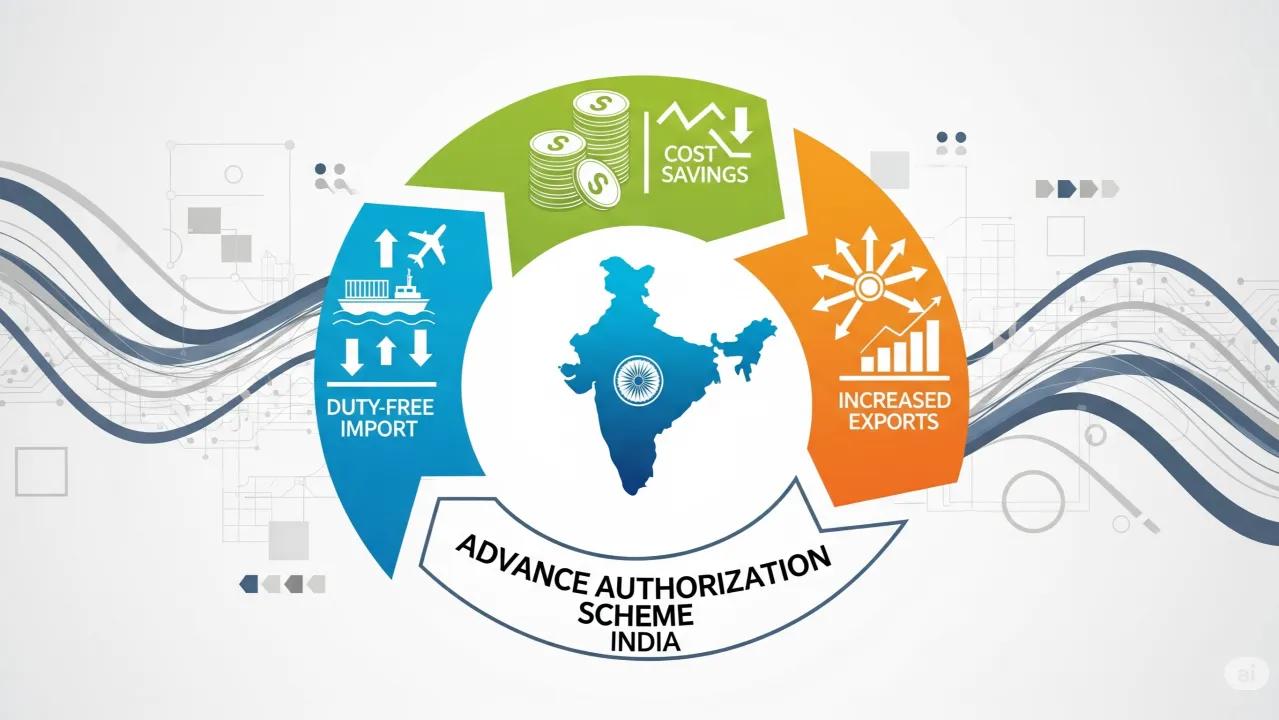
The Advance License (also called Advance Authorisation) lets you import raw materials, components, and consumables at zero customs duty before you manufacture. No Basic Customs Duty. No IGST on eligible inputs. You import duty-free, manufacture, and export within 18 months.
The scheme requires a minimum of 15% value addition and compliance with Standard Input-Output Norms (SION). Once you fulfil your export obligation, you apply for EODC and your bank guarantee at Customs is released.
The core advantage: You never pay the duty in the first place. No cash outflow. No waiting for a refund. Your working capital stays in your business.
Duty Drawback Pay First, Claim Later
The Duty Drawback Scheme works differently. You pay customs duties on your imported inputs, manufacture your export product, ship it, and then claim a refund of the duties paid. This refund is administered by CBIC and processed automatically through ICES upon filing of your shipping bill.
There are two routes:
All Industry Rate (AIR) standard rates are notified by the government for common export products. Automatically processed. Simple. But it may not reflect your actual duty incidence.
Brand Rate: a customised rate based on your specific manufacturing process and actual duty paid. Requires detailed documentation but often yields a significantly higher refund.
The core limitation: You pay first. The refund comes after. Your working capital is tied up in the interim, and the AIR rate may only partially compensate you for actual duties paid.
The Savings Comparison: Where the Numbers Actually Land
This is where the decision becomes clear for most manufacturers.
Factor | Advance License | Duty Drawback (AIR) |
When a benefit is received | Before production (zero upfront duty) | After export (refund) |
Duty coverage | 100% of customs duty on eligible inputs | Partial AIR rate may be 3,4% of FOB value |
IGST benefit | Yes, exempt on eligible inputs | No IGST refund under Drawback |
Working capital impact | Positive, no upfront duty payment | Negative capital locked until refund |
Value addition requirement | Yes, minimum 15% | No |
Export obligation | Yes, 18 months, strict SION compliance | No obligation, simpler compliance |
Refund speed | N/A (no payment made) | AIR: fast via ICES · Brand Rate: slower |
Best for | High-import-input manufacturers | Traders, merchant exporters, low-import inputs |
When your input customs duty load is high, say,15,20% customs duty on imported inputs that constitute 50% of your product cost, the duty savings under Advance Authorisation are approximately 7.5,10% of FOB value.
The AIR Drawback rate for the same category may be only 3,4%. Advance Authorisation saves significantly more in absolute rupee terms.
When Advance License Wins and When It Doesn't
Advance License wins when:
You're a manufacturer with significant imported inputs. Your input duty load is 10% or higher. You have predictable export volumes that let you confidently commit to an 18-month obligation. You need to protect working capital and can't afford to tie up funds in a duty payment pending refund.
For high-import-input manufacturers, Advance Authorisation isn't just more savings; it's a structurally better cash flow position from day one.
Advance License is harder when:
You're a merchant exporter or trader who doesn't manufacture directly. Your production process is irregular, or your export volumes are unpredictable. Your inputs don't fit standard SION categories and require ad hoc norms fixation. You lack the compliance infrastructure to track SION norms, maintain consumption registers, and manage EODC filing.
The scheme's compliance obligations are real. But they're manageable with the right expert support.
When Duty Drawback Makes More Sense
Duty Drawback isn't a lesser scheme; it's the right tool in specific situations.
Drawback wins when:
You're a trader or merchant exporter who doesn't import raw materials directly. Your imported input proportion is low. Your export product isn't manufactured from scratch; you're adding value to finished or near-finished goods. You need simplicity. AIR Drawback is automatically processed on shipping bill filing with no separate application.
Duty Drawback is simpler and suits traders or exporters of finished goods. It doesn't require SION compliance or an export obligation. For businesses where that simplicity matters more than maximising the absolute saving, Drawback is the right fit.
Can You Use Both?
Sometimes, but with a critical restriction.
You cannot claim RoDTEP on exports made under Advance Authorisation. The AA scheme is considered to have already provided comprehensive input cost benefits. Claiming a drawback on top of AA inputs is also restricted because the duty was never paid, so there's nothing to draw back.
However, if you hold an EPCG licence where you imported capital goods at zero duty, you can still claim both RoDTEP and Drawback on the goods you export under that obligation. EPCG covers capital goods. Drawback and RoDTEP cover production inputs. These are compatible.
Understanding these interactions requires careful planning, which is another reason expert guidance matters.
How to Decide: A Simple Decision Framework
Ask yourself these four questions:
1. What proportion of your product cost comes from imported inputs? High import dependency (30%+) → Advance License typically saves more. Low import dependency → Drawback or RoDTEP may be sufficient.
2. Can you commit to an 18-month export obligation? Yes, with predictable volumes → Advance License is viable. No, with irregular exports → Drawback's flexibility may suit better.
3. Do you manufacture or trade? Manufacturer → Advance License is designed for you. Merchant exporter or trader → Drawback is more straightforward.
4. How important is working capital protection? Critical → Advance License (no upfront duty payment). Less critical → Drawback works for your cash flow model.
Why Expert DGFT Support Changes the Calculation
Here's what most exporters don't realise until it's too late.
Both schemes require documentation precision. Both have compliance risks. And the difference between maximum savings and partial savings often comes down to how accurately norms are structured, how well obligations are tracked, and how cleanly EODC or Drawback claims are filed.
Working with expert DGFT consultants means your Advance License norms reflect your actual manufacturing process, not a generic SION approximation that underestimates your inputs. It means your Drawback Brand Rate application captures the full actual duty incidence, not just the standard AIR. And it means compliance obligations are tracked continuously, not scrambled at the deadline.
DGFT Guru brings 38+ years of experience and 7,000+ resolved cases to exactly this kind of strategic scheme planning. Whether you're choosing between the two schemes, trying to maximise one you're already using, or managing a legacy licence that needs clean closure, the right expert makes the financial difference.
Conclusion
Both the Advance License and Duty Drawback are legitimate, powerful tools. Neither is universally better. The right answer depends on your manufacturing model, import intensity, export volume predictability, and working capital position.
But for most Indian manufacturers importing significant raw material volumes, Advance Authorisation typically delivers more savings, better cash flow, and a structurally lower input cost base if managed correctly.
Know your numbers. Choose the right scheme. And make sure you have the expertise to extract its full value.