

For all the attention surrounding real-time payments, digital wallets and financial automation, one of the less obvious realities of modern business is that paper checks have not disappeared.
Businesses still pay landlords, contractors, suppliers, employees and service providers through checks. At the same time, they are increasingly expected to move money electronically through ACH transfers, wires, cards and other digital channels. The result is a payment environment where old and new methods often have to coexist.
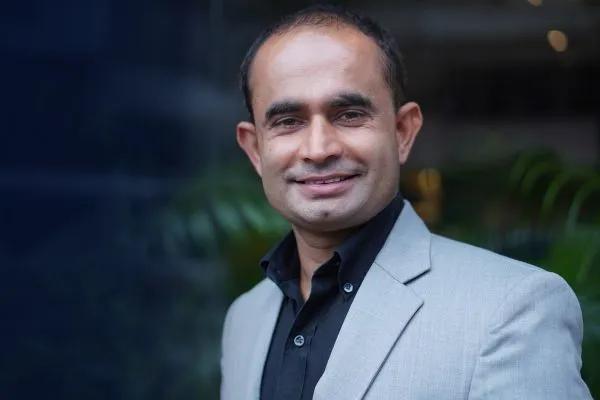
For Sabeer Nelli, founder and CEO of Zil Money, this is less a question of choosing between paper and digital payments than it is a question of making the two work together more efficiently.
That perspective comes from experience outside traditional fintech. Before building payment technology, Nelli founded Tyler Petroleum in 2005 and operated a business with substantial payment and vendor-management needs. His experience running that company helped expose a problem that is easy to overlook from the outside: payment complexity can become an operational problem long before it becomes a technology problem.
The Payment Problem Hidden Inside Everyday Operations
For a growing company, paying a vendor is rarely just a matter of clicking “send.”
A finance team may need to determine whether a supplier accepts ACH, whether a contractor prefers a check, whether a transaction requires a wire, how an invoice should be recorded, and which employee has authority to approve the payment.
As the number of vendors increases, these small decisions accumulate.
Nelli’s experience at Tyler Petroleum reportedly exposed exactly this kind of fragmentation. The business needed to work with multiple payment methods rather than rely on a single channel. His response was to look at the problem from an operator’s perspective: instead of asking businesses to adapt to disconnected financial tools, could the payment experience be brought into a more unified environment?
That thinking eventually contributed to the development of Zil Money and its payment-related products. The company describes its platform as supporting multiple methods, including ACH, wire transfers, checks, eChecks and other payment options.
The important idea is not simply that one platform can offer several payment methods. The bigger issue is workflow.
A payment system becomes more useful when it fits the way a business already operates.
Why Check Printing Technology Still Matters
The continued role of checks illustrates an important lesson about financial technology: innovation does not always mean eliminating an older method.
Many businesses still encounter vendors that prefer or require checks. Others use checks because their internal accounting processes were built around them. For those companies, completely abandoning checks may be impractical.
The opportunity, therefore, is to modernize the process surrounding the check.
OnlineCheckWriter.com, powered by Zil Money, positions itself as a cloud-based check printing platform that allows businesses to create and print checks using blank check stock or plain paper and a standard printer. The service also supports electronic checks and check mailing.
This approach changes the economics and logistics of traditional check management.
Instead of ordering large quantities of pre-printed checks and storing them until needed, a business can create checks when payments are required. Instead of treating check writing as an isolated administrative activity, it can become part of a broader digital payment workflow.
That distinction matters for small businesses in particular.
A large enterprise may have dedicated treasury systems, accounting departments and sophisticated enterprise resource planning software. A smaller company may have one owner, an accountant and a handful of employees handling the same responsibilities.
Technology designed for that reality has to reduce complexity rather than add another layer to it.
From Paper Checks to a Broader Payment Workflow
The evolution of check printing technology also demonstrates how the definition of a “digital payment” has changed.
Digitization does not necessarily mean that the final payment must be electronic.
A business might create a payment digitally, approve it online, generate a check electronically, print it locally and mail it. Another business might choose an eCheck. A third might use ACH.
The underlying principle is flexibility.
Zil Money’s current platform describes support for ACH transfers, wires, printed checks, eChecks, virtual cards and other payment functions. Its website also highlights integrations with accounting platforms and tools intended to connect payment activity with broader financial workflows.
For Nelli, this reflects a practical view of financial technology: technology should accommodate the payment realities of businesses rather than force every business into the same payment model.
That is particularly relevant as small and midsize businesses become increasingly digital while continuing to operate in industries where traditional payment practices remain common.
The Real Innovation May Be Reducing Friction
Fintech conversations often center on speed.
How quickly can a transaction settle? How quickly can a customer receive funds? How quickly can an invoice be paid?
Those questions matter, but Nelli’s business experience suggests another metric deserves attention: how much unnecessary work surrounds a payment.
If a finance employee has to move information between several systems, manually enter payment details, print paperwork, track a mailed check and then reconcile the transaction separately, the payment may technically work while the process remains inefficient.
This is where cloud-based payment technology can have an operational impact.
A centralized environment can give businesses a place to create payments, track activity and connect payment information with accounting workflows. OnlineCheckWriter.com says its platform supports integrations with accounting and payroll systems, including QuickBooks, Xero and other business software.
The goal is not simply to make a check easier to print. It is to make the payment surrounding that check easier to manage.
Security Has to Be Part of the Product
Financial technology also brings a responsibility that ordinary business software does not: protecting information associated with money.
Payment platforms deal with sensitive financial data, which means security cannot reasonably be treated as an afterthought.
Nelli has publicly identified fraud prevention and compliance as continuing challenges in the payment industry, noting that fraud evolves alongside technology.
Zil Money and OnlineCheckWriter.com publish information about security controls and compliance on their websites. The company also announced in 2025 that Zil Money had achieved SOC 2 compliance.
Importantly, these statements should be understood specifically rather than broadly. SOC 2 is an assessment framework concerning controls relevant to areas such as security, availability, processing integrity, confidentiality and privacy; it should not be interpreted as a blanket guarantee that every possible security risk has been eliminated.
The same principle applies to the company's financial services. OnlineCheckWriter.com explicitly describes itself as a financial-technology company rather than a bank and says banking and money-movement services are provided through partner financial institutions and licensed providers.
That distinction is important for customers evaluating fintech platforms.
Building From an Operator’s Perspective
What makes Nelli's approach different from a purely technology-led fintech narrative is the origin of the problem.
He did not begin by identifying a fashionable financial technology trend and then searching for a market. His stated motivation came from operating a business and encountering payment-management difficulties firsthand.
That distinction can influence product design.
An entrepreneur who has personally dealt with vendors, payroll, accounts payable and multiple payment channels may view payment technology differently from someone approaching the industry exclusively from a software perspective.
The result is a philosophy centered on practical business needs: payment choice, workflow simplicity, access controls, accounting connectivity and the ability to manage different transaction types without constantly changing systems.
A More Practical Future for Digital Payments
The next stage of financial technology may not be about making every traditional financial instrument disappear.
Instead, it may be about making different payment methods easier to manage from a common digital environment.
Checks can coexist with ACH. Electronic payments can coexist with established accounting practices. A small business can adopt new technology without immediately rebuilding every financial process it already uses.
That is the space where check printing technology becomes more interesting than it initially appears.
A cloud-based check printing platform is not merely a digital replacement for a checkbook. When connected with broader payment and accounting functions, it can become one component of a more flexible accounts-payable workflow.
For Sabeer Nelli, the broader lesson appears to come from the same place as the original idea: business technology has value when it solves a real operational problem.
The future of digital payments may be increasingly automated, immediate and interconnected. But businesses will continue to operate according to their customers, vendors, industries and individual circumstances.
The fintech companies that recognize that reality may be better positioned to build useful tools—not by insisting that every business change overnight, but by giving businesses better ways to manage the financial systems they already depend on.
For Nelli, that means approaching financial technology from the perspective of the business owner: identify the friction, understand why it exists, and build technology that makes the underlying process easier to manage.
That may ultimately be a more durable definition of fintech innovation than simply moving money faster.