

From Paper Checks to Digital Workflows: How Sabeer Nelli Sees the Next Chapter of Small-Business Payments
For many small businesses, financial technology does not begin with a futuristic app or a complicated digital transformation strategy. It begins with a much simpler question: How can a business pay people accurately, keep records organized, and avoid wasting time on routine financial tasks?
That question has become increasingly important as small and midsize businesses navigate a payment environment that includes checks, ACH transfers, cards, wires, and newer real-time payment methods. While consumer finance has moved rapidly toward digital-first experiences, business payments can still involve processes that feel surprisingly manual.
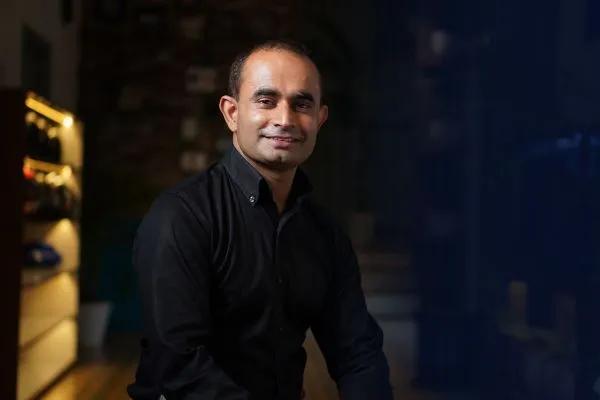
Sabeer Nelli, a fintech entrepreneur and the founder and CEO of Zil Money, approaches that problem from an unusual perspective. His experience did not begin exclusively in financial technology. He founded Tyler Petroleum in 2005 and later developed financial technology businesses around problems he encountered while operating a growing company. His own account of that journey is that running a business exposed him to the limitations of fragmented payment tools and encouraged him to build technology around those practical needs.
That background helps explain an important part of Nelli's approach to fintech: innovation does not necessarily mean eliminating familiar financial methods. Sometimes it means making those methods work better.
The overlooked problem with business payments
The conversation around fintech often focuses on speed. Mobile payments, instant transfers, digital wallets, and automated financial services have changed expectations about how quickly money should move.
But speed is only one part of the equation for businesses.
A company may need to pay a contractor by check, transfer money through ACH, send a wire, reconcile transactions with accounting software, and maintain an internal record of who authorized a payment. These activities can involve different systems and different workflows.
For a small business without a large finance department, the administrative burden can be significant.
This is where Nelli's experience as an operator becomes relevant. Rather than treating financial technology simply as a way to create another payment method, his approach has centered on bringing multiple payment and financial-management functions into a more connected environment.
Zil Money describes itself as a financial technology company rather than a bank, with banking and money-movement services provided through partner financial institutions and licensed service providers. Its platform supports several business payment functions, including ACH, wires, checks, and other payment options.
The distinction matters. Modern fintech increasingly sits between traditional financial institutions and the businesses that use their services, providing technology that can make existing financial infrastructure easier to access and manage.
Why check printing still matters
The continued role of checks may seem surprising in an increasingly digital economy. Yet checks remain part of many business workflows, particularly for vendors, contractors, rent, and other transactions where a paper payment is still preferred or required.
Nelli's response has not been to dismiss checks as outdated. Instead, technology can be applied to the process surrounding them.
A cloud-based check printing platform, for example, can allow businesses to create and customize checks without relying exclusively on traditional pre-printed check stock. Zil Money's check-printing service allows users to design checks, add business information, save templates, and print using a standard printer and blank stock paper. The platform also supports importing checks from accounting systems.
That may sound like a modest improvement, but workflow changes often matter more to small companies than flashy technology.
Consider a business that needs to issue several payments at the end of a week. A conventional process might require someone to order checks, enter information manually, verify amounts, obtain authorization, and maintain records separately. Digitizing parts of that process can reduce repetitive work while giving the business greater visibility over what has been created and printed.
Zil Money's documentation also states that its check activity can be tracked, including information such as who created a check, when it was created, and its print or mailing status.
The larger lesson is that financial technology does not always need to replace an established financial instrument to create value. Sometimes the better opportunity is improving the infrastructure around it.
Building technology around the way businesses actually work
One of the more interesting aspects of Nelli's entrepreneurial story is the connection between operating a traditional business and developing financial technology.
According to Tyler Petroleum's published biography of Nelli, technology was already an important part of the company's operations before his fintech businesses developed. The company says its software experience grew from practical business needs, eventually contributing to technology intended to improve check management and related processes.
That experience suggests a different way of thinking about entrepreneurship.
Instead of asking what technology is fashionable, entrepreneurs can begin by asking where employees lose time, where mistakes occur, and where different systems fail to communicate.
For small businesses, these problems are often hidden in everyday administrative tasks rather than headline-making financial challenges.
A payment may only take a few minutes to initiate, but the surrounding work—checking information, printing documents, communicating with vendors, reconciling accounts, and maintaining records—can consume considerably more time.
This is one reason integrations have become an important part of business fintech. Zil Money lists integrations with platforms including QuickBooks, Xero, Zoho, Gusto, and Zapier, while also stating that its platform connects with more than 22,000 banks and financial institutions.
The objective is not simply to put another financial application in front of a business owner. Ideally, technology should reduce the number of disconnected steps required to complete a financial task.
Security becomes part of the product
Convenience alone is not enough when technology handles financial information.
As payment workflows move online, businesses need to consider access controls, data protection, transaction monitoring, and operational processes alongside ease of use.
Zil Money publishes information about its security and compliance framework, including claims regarding SOC 1, SOC 2, PCI DSS, and ISO-related certifications or standards on its trust and compliance page.
The company's support documentation also describes its use of encryption and access controls for protecting data and outlines the platform's approach to applicable security standards.
For a fintech entrepreneur, this highlights an important reality: financial technology is ultimately a trust business.
A beautifully designed interface has limited value if customers do not believe their financial information and payment processes are being handled responsibly. Security therefore cannot be treated simply as a technical feature added after a product has been built. It has to be considered part of the product itself.
A practical definition of fintech innovation
The story of Sabeer Nelli offers a useful counterpoint to the idea that fintech innovation must always involve completely new financial products.
His work points toward a more practical definition: technology can create meaningful change by removing friction from existing financial activities.
Cloud-based check printing is a good example. The check itself remains familiar. What changes is the surrounding experience. A business can create a payment digitally, customize it, print it through its own equipment, or use an online mailing option. Zil Money also offers digital checks and other payment services through its platform.
This approach can be especially relevant to smaller companies that may not have the resources to replace every legacy system at once.
Rather than forcing businesses into an entirely new financial model, technology can allow them to modernize individual parts of their workflow.
That gradual approach may ultimately be more useful than transformation for transformation's sake.
What comes next for business payments?
The future of business payments is unlikely to be defined by one single method.
Checks will continue to exist alongside ACH, cards, wires, and faster digital payment rails. The more important question may be how easily businesses can manage those methods from a coordinated workflow.
Nelli's career illustrates that perspective. His path from operating Tyler Petroleum to building financial technology businesses reflects a broader shift in entrepreneurship: founders are increasingly using their own operational experiences to identify inefficiencies that conventional financial products have overlooked.
For small-business owners, the practical value of fintech may therefore be less about chasing the newest payment trend and more about gaining control over the financial processes already embedded in their businesses.
That means clearer records, fewer repetitive tasks, better integration between systems, and payment tools that fit the way companies actually operate.
The most useful financial technology may not always be the technology that looks the most revolutionary.
Sometimes, it is the technology that quietly makes an ordinary business process easier, more organized, and less dependent on manual work.
That is the space Sabeer Nelli has chosen to explore—and it is one that could become increasingly important as small businesses continue moving toward more connected financial operations.