

Why the Future of Business Payments May Depend on Fixing the Processes We Still Take for Granted
For all the attention given to real-time payments, digital wallets, artificial intelligence, and embedded finance, one part of business payments has remained surprisingly persistent: the paper check.
That persistence says something important about financial technology. Innovation is not always about eliminating an established payment method. Sometimes, it is about making an existing process work more effectively within a modern financial workflow.
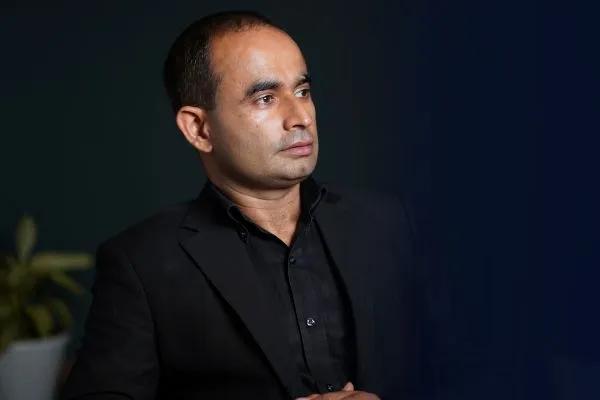
This is one of the ideas that shaped the work of Sabeer Nelli, a fintech entrepreneur whose experience running a traditional operating business led him to examine the practical problems businesses encounter when managing payments across multiple systems.
Before building Zil Money, Nelli founded and operated Tyler Petroleum. The company's own account of its history says that managing thousands of vendors and multiple payment processes exposed him to the inefficiencies created by relying on separate platforms for different financial tasks.
Rather than approaching the problem purely as a technology trend, Nelli approached it as an operator.
That distinction matters.
The Overlooked Problem Inside Business Payments
For a consumer, sending money can appear simple. A person opens an application, selects a recipient, and completes a transaction within moments.
Businesses operate differently.
The challenge, therefore, is not necessarily the absence of digital payment options. It is the fragmentation between them.
In describing the origins of Zil Money, Nelli has said that Tyler Petroleum faced exactly this type of problem. With hundreds of employees and thousands of vendors, the company had to accommodate different payment methods, including checks, ACH, wires and cards.
That experience helped shape a different question:
How can businesses manage the payment methods they already need without constantly moving between disconnected systems?
It is a less glamorous question than asking what the next major payment technology will be. But for a finance team processing payments every week, it can be much more practical.
When Check Printing Becomes a Technology Problem
Checks are frequently described as an outdated payment method. Yet businesses continue to use them for legitimate operational reasons.
The bigger issue is often everything surrounding the check.
For a small or midsize business, those individual tasks can add up.
This is where check printing technology becomes more interesting.
Instead of treating check printing as an isolated office task, financial technology can place it inside a broader digital workflow. OnlineCheckWriter.com, powered by Zil Money, provides businesses with online check-printing capabilities alongside other payment functions. Its current platform also lists ACH payments, direct deposits, real-time payments, eChecks and other business payment services.
The important distinction is that the technology does not necessarily attempt to eliminate the check itself.
It changes the process used to create and manage it.
That illustrates a broader principle in fintech: modernization does not always require replacing an existing financial instrument. Sometimes, it means reducing the manual work around that instrument.
The Operator's Perspective on Financial Technology
One of the more interesting aspects of Nelli's fintech journey is that the initial problem was operational rather than theoretical.
He was not simply identifying a potential market opportunity from outside the industry. He was managing a business and dealing with the consequences of fragmented payment systems firsthand.
That background provides a useful perspective on fintech entrepreneurship.
Technology can be highly sophisticated, but sophisticated technology does not automatically mean a better financial experience. A finance manager may not care about the technical architecture behind a payment. They care whether the payment can be created, approved, delivered, tracked and reconciled without unnecessary complications.
That is where product design meets financial infrastructure.
For Nelli, the starting point was not simply building another financial application. It was attempting to solve a problem he had already encountered while running a business.
From a Specific Problem to a Broader Platform
The development of Zil Money also illustrates how a narrowly defined operational problem can lead to a broader fintech platform.
Check printing was one part of the challenge.
Nelli has described Zil Money as an effort to bring multiple payment methods together for small and midsize businesses that may otherwise have to use several platforms or expensive enterprise software.
That approach reflects an important reality about the small-business market.
Large corporations can often purchase specialized enterprise systems for individual financial functions. Smaller companies may not have the same resources, personnel or appetite for managing numerous software subscriptions.
For them, integration can be as valuable as innovation.
A platform does not necessarily need to invent an entirely new payment method to create value. It can make existing payment methods easier to manage together.
Why Small Businesses Matter to the Fintech Conversation
Much of the fintech industry is discussed through the experiences of consumers and large financial institutions.
Small businesses are different.
They often operate with lean teams, meaning that administrative tasks can consume time that would otherwise be spent on customers, employees, suppliers or growth.
A business owner who spends hours dealing with payment administration is experiencing a technology problem, even if the underlying transaction itself is straightforward.
That is why the evolution of business payment software deserves attention beyond the question of whether checks are “old” or “new.”
Nelli's experience provides one example of how that philosophy can emerge from business operations rather than from a technology laboratory.
The Case for Coexistence Instead of Replacement
There is sometimes an assumption that technological progress means one payment method will inevitably replace another.
History is less predictable.
Cash has not disappeared because cards became popular. Checks have not disappeared because online transfers became available. And digital payments have not eliminated every traditional payment process.
Different methods continue to serve different purposes.
For businesses, the practical challenge is therefore coexistence.
That is where a cloud-based check printing platform can have a role.
The value proposition is therefore less about declaring checks obsolete and more about bringing an established payment method into a technology environment that businesses are already using.
Keeping the Claims Grounded
The growth of Zil Money and OnlineCheckWriter.com has generated a number of public milestones. The company's current website reports more than one million business accounts and more than $100 billion in gross transaction volume, while its press materials have separately reported milestones for checks processed and registered users.
Those figures are company-reported milestones rather than independent industry measurements, so they are best understood in that context.
The same principle applies to product capabilities.
That distinction is particularly important in fintech journalism because technology platforms, banks and payment providers can have different roles within the same financial ecosystem.
Clear language helps readers understand what a company actually provides rather than allowing promotional terminology to blur those distinctions.
What Nelli's Story Says About Fintech Innovation
The story of Sabeer Nelli and Zil Money is ultimately less about making checks disappear and more about questioning why routine business payments have to remain complicated.
That may be the more useful conversation for the next stage of fintech.
The most useful financial technology may therefore not be the platform that forces businesses to abandon everything they already use.
It may be the platform that helps businesses manage those different methods more efficiently.
Nelli's transition from operating Tyler Petroleum to building financial technology illustrates that approach. His fintech journey began with a problem he experienced himself: managing business payments across fragmented systems.
The solution was not simply to create another payment method.
It was to rethink how existing payment methods could fit together.
Looking Beyond the Hype
Fintech conversations often gravitate toward the newest technology. Artificial intelligence, blockchain, real-time payments and digital banking platforms naturally attract attention because they represent visible change.
But financial innovation also happens in less dramatic places.
Those improvements may not sound revolutionary on their own.
Collectively, however, they can change how businesses manage money every day.
That is why the evolution of financial technology, digital payments, check printing technology and cloud-based check printing platforms deserves to be considered from an operational perspective rather than only through the lens of disruption.
The future of business payments will almost certainly involve faster and more digital infrastructure. But it will also require technology that recognizes the reality of how businesses operate today.
The opportunity lies somewhere between those realities.
The lesson is straightforward: innovation does not always begin by inventing something nobody has seen before.
Sometimes it begins by looking at an ordinary business process and asking a better question.
Why does this have to be so complicated?
For Nelli, that question became the starting point for building technology around a problem he had experienced firsthand—and for exploring how businesses can bring established payment practices and newer digital tools into a more connected workflow.